Last updated: June 2026
Roof replacement cost in the United States ranges from $5,000 to $25,000, with most homeowners spending around $10,000 for a standard 2,000 square foot home with asphalt shingles. The final price depends on roof size, material, pitch, and your location — and the gap between a basic asphalt job and a premium metal or slate roof can run into tens of thousands of dollars.
This guide breaks down roof replacement cost by material and size, explains the tear-off and hidden costs most quotes gloss over, and shows you how to tell whether you’re getting a fair price.
How Much Does Roof Replacement Cost?
Roof replacement costs $5,000 to $25,000 for most homes, or $3.50 to $7.00 per square foot for asphalt shingles installed. A typical 2,000 square foot home with asphalt runs $8,000–$16,000. Metal roofing costs 2–3x more. Premium materials like tile and slate can exceed $40,000. Labor accounts for roughly 60–65% of the total.
| Roofing Material | Cost Per Sq Ft (Installed) | Typical 2,000 Sq Ft Home |
|---|---|---|
| Asphalt 3-tab shingles | $3.50 – $5.50 | $7,000 – $11,000 |
| Architectural shingles | $4.50 – $7.00 | $9,000 – $16,000 |
| Metal (standing seam) | $9 – $16 | $18,000 – $35,000 |
| Wood shake | $9 – $14 | $18,000 – $28,000 |
| Clay / concrete tile | $10 – $20 | $20,000 – $42,000 |
| Natural slate | $15 – $30+ | $30,000 – $60,000+ |
How Roofing Is Priced: Understanding “Squares”
Roofing is priced per “square” — one roofing square equals 100 square feet of roof area. A typical 2,000 square foot home has roughly 22–25 squares of roof, because your roof is 20–30% larger than your home’s footprint once pitch and overhangs are factored in. Most contractors charge $350–$550 per square for asphalt shingles installed.
This is why two homes with the same floor area can have very different roof replacement costs — a steep, complex roof has far more square footage and more labor-intensive detail than a simple low-pitch roof of the same footprint.
What Factors Determine Roof Replacement Cost?
1. Roofing Material
Material is the single biggest cost driver. Asphalt shingles are the most affordable and popular, covering over 75% of US roofs. Architectural shingles (also called dimensional or laminate) cost a bit more than basic 3-tab but last longer and resist wind better — they’re now the industry standard. Metal costs 2–3x more upfront but lasts 40–70 years vs. 20–30 for asphalt. Tile and slate are premium options lasting 50–100 years, but their weight often requires reinforced roof structure, adding cost.
2. Roof Size and Complexity
Beyond raw square footage, complexity drives labor. A simple gable roof with few penetrations is cheapest. Hip roofs with multiple valleys, dormers, skylights, and chimneys cost more because every intersection requires hand-fitted flashing. Multiple stories add scaffolding and safety requirements.
3. Roof Pitch
Steeper roofs require more safety equipment and slower work, adding 10–50% to labor costs. A low-pitch roof is cheapest to replace; a steep pitch (8:12 or higher) can add $1,000–$3,000 to your total bill due to staging and the slower pace of working at height.
4. Tear-Off vs. Overlay
Removing old roofing (tear-off) adds $1–$3 per square foot but gives a clean slate and lets the contractor inspect the decking underneath. Overlaying new shingles over old saves $1,000–$2,000 but is only allowed once (most codes cap roofs at two layers), adds weight, shortens lifespan, and prevents deck inspection. Tear-off is almost always the better long-term choice.
5. Your Location
Roofing labor costs vary significantly by state — expect 30–50% more in California, New York, or Massachusetts than in the Midwest or Southeast. Climate-driven code requirements matter too: northern states require ice-and-water shield (adding $500–$1,500), and hurricane-prone regions require enhanced nailing and special underlayment (adding $1,000–$3,000).
The costs hidden in your quote: Beyond shingles and labor, ancillary materials add up fast — underlayment, ice-and-water shield, drip edge, ridge vent, pipe boots, and step flashing. On a typical roof these total $1,000–$2,500. A complete quote includes them; a suspiciously low quote often leaves them out, then adds them back mid-project. Always ask what’s itemized.
Roof Replacement Cost Calculator
Asphalt vs. Metal vs. Tile: Which Roof Is Right for You?
The material decision comes down to budget, how long you’ll stay, and your climate. Here’s the honest comparison:
- Asphalt shingles — Best value for most homeowners. Architectural shingles offer the best longevity-to-cost ratio. Lasts 20–30 years. Choose these unless you have a specific reason not to.
- Metal — Higher upfront cost but lasts 40–70 years, sheds snow well, and is increasingly popular in fire-prone and snowy regions. Over a long ownership horizon, the cost-per-year can beat asphalt because you replace it far less often.
- Tile and slate — Premium materials with 50–100 year lifespans and distinctive appearance. Heavy, so they require structural reinforcement on many homes. Best for specific architectural styles and homeowners staying long-term.
If you’re replacing your roof, it’s often the right time to address related exterior work. Gutters in particular should be evaluated — see our gutter installation cost guide. If you’re coordinating a broader exterior refresh, our siding replacement cost guide covers bundling the work to save on setup costs.
Is Roof Replacement Covered by Insurance?
Often yes — if the damage resulted from a covered event like a storm, hail, or fallen tree. Most homeowner’s policies cover roof replacement for sudden accidental damage or natural disasters. What’s generally not covered: gradual wear, age-related deterioration, or a roof that’s simply reached the end of its lifespan.
Before paying out of pocket, check whether your policy covers storm or hail damage and document everything with photos. If a storm recently passed through, a reputable local roofer can assess whether you have a legitimate insurance claim — but be wary of “storm chaser” contractors who appear after weather events and pressure you into filing claims or signing contracts on the spot.
Is a New Roof Worth It? ROI and Resale
A new asphalt shingle roof recoups approximately 60–70% of its cost at resale according to the National Association of Realtors and the Remodeling Cost vs. Value Report. More importantly, a new roof makes your home significantly easier to sell — a roof in poor condition is one of the most common deal-breakers in home inspections, and some buyers’ lenders require a sound roof as a condition of financing.
If your roof is near end of life and you’re planning to sell within a few years, replacing it proactively often nets more than the partial ROI suggests, because it removes a major negotiating point and broadens your buyer pool.
When Do You Need a Roof Replacement vs. Repair?
If more than 30% of your roof is damaged or your roof is over 20 years old, full replacement is usually more cost-effective than repeated repairs. Signs you need replacement: missing or curling shingles, granules collecting in gutters, daylight visible through the attic, sagging areas, and water stains on interior ceilings. Localized damage on a relatively young roof is usually a repair, not a replacement.
How to Save Money on Roof Replacement
- Replace in fall or late winter when contractors are less busy and may offer off-season discounts.
- Ask about manufacturer rebates — many shingle brands run seasonal promotions worth hundreds of dollars.
- Check insurance first — if you have storm or hail damage, your policy may cover most of the cost minus your deductible.
- Choose architectural asphalt shingles for the best value-to-longevity ratio if premium materials are out of budget.
- Get 3 itemized quotes with the same material spec so you’re comparing equivalent scope, not just bottom-line numbers.
How Long Does Roof Replacement Take?
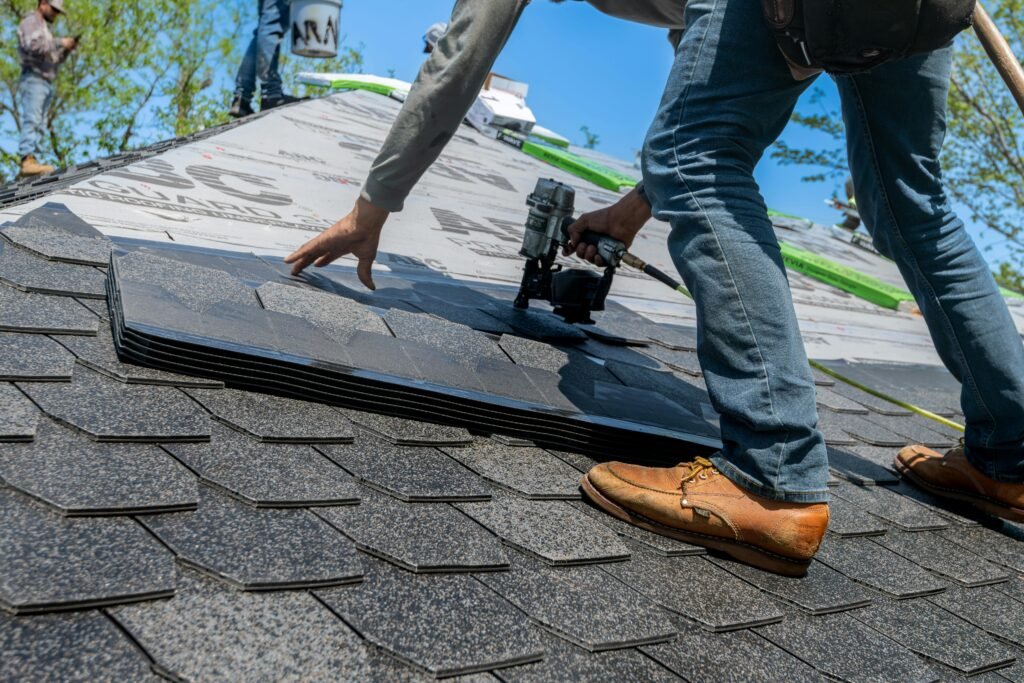
Most residential roof replacements take 1–3 days depending on size and complexity. A standard 2,000 square foot home with asphalt shingles is typically completed in one full day by a professional crew. Metal roofing takes 2–5 days. Wood shake or slate can take 6–8 days. Rain, snow, high winds, or temperatures below 40°F will delay installation.
Frequently Asked Questions About Roof Replacement Cost
How much does it cost to replace a roof on a 2,000 square foot house?
Roof replacement on a 2,000 square foot house costs $8,000 to $16,000 for asphalt shingles. Basic 3-tab shingles run $7,000–$11,000; architectural shingles $9,000–$16,000. Metal pushes the total to $18,000–$35,000, and premium tile or slate can exceed $40,000.
What is the cheapest roofing material?
Asphalt 3-tab shingles are the cheapest widely-used roofing at $3.50–$5.50 per square foot installed. Architectural shingles cost slightly more but offer better durability and wind resistance, making them the better value for most homeowners despite the small premium.
Is a metal roof worth the extra cost?
For homeowners staying long-term, often yes. Metal costs 2–3x more upfront but lasts 40–70 years vs. 20–30 for asphalt, meaning you may never replace it again. It also sheds snow, resists fire, and can lower insurance premiums in some regions. The cost-per-year often beats asphalt over a long ownership horizon.
Does homeowner’s insurance cover roof replacement?
Insurance typically covers roof replacement only if the damage resulted from a covered event like a storm, hail, or fallen tree. Gradual wear, age-related deterioration, or a roof at the end of its lifespan is not covered. Check your policy and document damage with photos before filing a claim.
How long does a roof last?
Lifespan by material: asphalt shingles 20–30 years, metal 40–70 years, wood shake 25–30 years, tile and slate 50–100 years. Actual lifespan depends on climate, installation quality, and ventilation. Roofs in harsh climates with intense sun, heavy snow, or frequent storms wear faster.
Should I overlay or tear off my old roof?
Tear-off is almost always better. It adds $1–$3 per square foot but lets the contractor inspect and repair the deck, avoids adding weight, and gives a longer-lasting result. Overlay saves money short-term but is only allowed once, shortens lifespan, and hides potential deck damage. Most codes cap roofs at two layers.
How much does it cost to tear off an old roof?
Tear-off and disposal costs $1 to $3 per square foot, or roughly $1,000–$3,000 for a typical roof depending on the number of existing layers. Two layers cost more to remove than one. Most contractors include tear-off in their quote — confirm it’s itemized.
How do I know if I need a new roof?
Signs you need replacement: missing or curling shingles, granules in gutters, daylight through the attic, sagging, and ceiling water stains. If more than 30% of the roof is damaged or it’s over 20 years old, replacement is usually more cost-effective than repeated repairs.
How long does it take to replace a roof?
Most asphalt roof replacements take 1–3 days; a standard 2,000 sq ft home is often done in one day. Metal takes 2–5 days, and wood shake or slate 6–8 days. Weather delays are common — installation needs dry conditions and temperatures above 40°F.
What time of year is cheapest for roof replacement?
Late fall and late winter are typically cheapest, when roofing demand drops and contractors have more availability. Spring and summer are peak season with the highest prices. Avoid scheduling during winter in cold climates, where freezing temperatures can delay or compromise installation.