
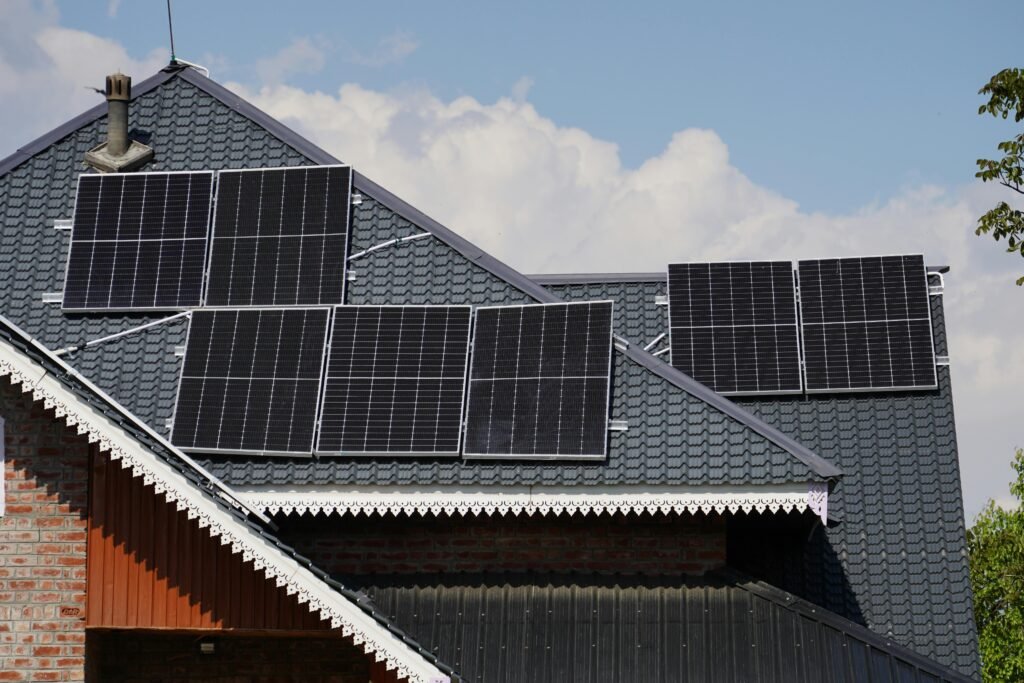
Solar panel installation cost in the United States ranges from $15,000 to $30,000 for a typical home before incentives. After the 30% federal tax credit, most homeowners pay $10,500 to $21,000. Use our free calculator below to get an instant estimate based on your home size and energy usage.
Solar Panel Installation Cost by System Size
| System Size | Avg Cost (before credit) | After 30% Tax Credit | Homes it Powers |
| 6 kW | $16,800 | $11,760 | Small home |
| 8 kW | $22,400 | $15,680 | Medium home |
| 10 kW | $28,000 | $19,600 | Large home |
| 12 kW | $33,600 | $23,520 | Very large home |
Use Our Free Solar Panel Installation Cost Calculator
Enter your home details below to get an instant cost estimate including federal tax credit savings.
Solar Panel Installation Cost Calculator
What Factors Affect Solar Panel Installation Costs?
1. System Size
Solar systems are sized in kilowatts (kW). A typical US home uses 10,500 kWh per year and needs a 6-8 kW system. Your actual system size depends on your electricity usage, roof orientation, and local sunlight hours. Always get a professional energy assessment before purchasing a solar system.
2. Panel Type and Efficiency
Standard monocrystalline panels cost $2,500-$3,500 per kW installed and have 18-20% efficiency. Premium panels from brands like SunPower or LG cost $3,500-$5,000 per kW but achieve 21-23% efficiency. Higher efficiency panels produce more power per square foot — important for homes with limited roof space.
3. Federal and State Incentives
The federal Investment Tax Credit (ITC) gives you a 30% credit on your total solar installation cost. Many states offer additional incentives — California, New York, and Massachusetts have some of the best state rebates. Net metering programs allow you to sell excess power back to the grid, further reducing payback time.
4. Roof Condition
If your roof needs replacement within 5 years, do it before installing solar — removing and reinstalling panels costs $1,500-$3,000. South-facing roofs with 30-45 degree pitch produce the most power. Shading from trees or nearby buildings significantly reduces system output and should be addressed before installation.
5. Battery Storage
A solar battery like the Tesla Powerwall costs $10,000-$15,000 installed and allows you to store excess power for nighttime use. Battery storage is optional but increasingly popular in areas with frequent power outages or time-of-use electricity pricing. Batteries also qualify for the 30% federal tax credit.
How to Save Money on Solar Panel Installation
- Get at least 3 quotes from certified solar installers (look for NABCEP certification)
- Apply for all available state and local incentives before signing a contract
- Consider solar leasing or PPA (Power Purchase Agreement) if upfront cost is prohibitive
- Install in winter when solar companies are less busy and offer better pricing
- Choose standard monocrystalline panels over premium brands for the best value
Frequently Asked Questions
How long does solar panel installation take?
The physical installation takes 1-3 days. However, the full process including permits, utility approval, and grid connection takes 1-3 months. Most homeowners start saving on electricity bills within 90 days of signing a contract.
How long until solar panels pay for themselves?
The average solar payback period in the US is 6-10 years after the federal tax credit. In sunny states like California, Arizona, and Florida, payback can be as short as 5-7 years. After payback, solar panels produce essentially free electricity for their remaining 15-20 year lifespan.
Do solar panels work on cloudy days?
Yes — solar panels produce 10-25% of their rated output on cloudy days. Germany, one of the world’s largest solar markets, has less sunshine than most US states yet generates significant solar power. Modern panels are efficient enough to produce meaningful power even in overcast conditions.
Bottom Line: Solar Panel Installation Cost
Solar panel installation costs $15,000-$30,000 before incentives for most US homes. After the 30% federal tax credit, the net cost drops to $10,500-$21,000. With average electricity savings of $1,200-$1,800 per year, most homeowners recoup their investment in 6-10 years. Use our free calculator above for a personalized estimate and always get multiple quotes from NABCEP-certified installers.