Walk into any home improvement store and you’ll find tile ranging from $0.50 to $50 per square foot — a 100x price difference that makes budgeting feel impossible. The truth is that tile floor installation costs between $700 and $4,000 for a typical room, with ceramic tile being the most affordable at $7-$11 per square foot installed and marble being the premium option at $20-$35 per square foot. Labor alone accounts for 50-60% of your total cost regardless of which tile you choose.
Tile Floor Installation Cost by Type
| Tile Type | Material Cost | Labor Cost | Total (per sq ft) |
| Ceramic | $2–$6 | $4–$8 | $6–$14 |
| Porcelain | $4–$10 | $5–$10 | $9–$20 |
| Natural stone | $8–$16 | $6–$12 | $14–$28 |
| Marble | $12–$25 | $8–$15 | $20–$40 |
Use Our Free Tile Floor Installation Cost Calculator
Enter your room dimensions, tile type, and installation pattern to get an instant estimate.
Tile Floor Installation Cost Calculator
What Drives Tile Installation Costs?
1. Tile Material
Ceramic tile is made from natural clay fired at lower temperatures — affordable, easy to cut, and perfect for bathrooms and kitchens. Porcelain is denser and more water-resistant, making it better for high-traffic areas and outdoor spaces. Natural stone like travertine or slate has unique character but requires sealing and more careful maintenance. Marble is the luxury choice — beautiful but porous, prone to staining, and requires professional installation to avoid cracking during cutting.
2. Installation Pattern
A standard straight lay is the cheapest to install because tiles align in simple rows with minimal cuts. Diagonal installation at 45 degrees creates more waste and requires more cuts, adding $1-$2 per square foot in labor. Herringbone and basketweave patterns are the most labor-intensive, adding $2-$4 per square foot and requiring a highly skilled installer to execute correctly.
3. Subfloor Preparation
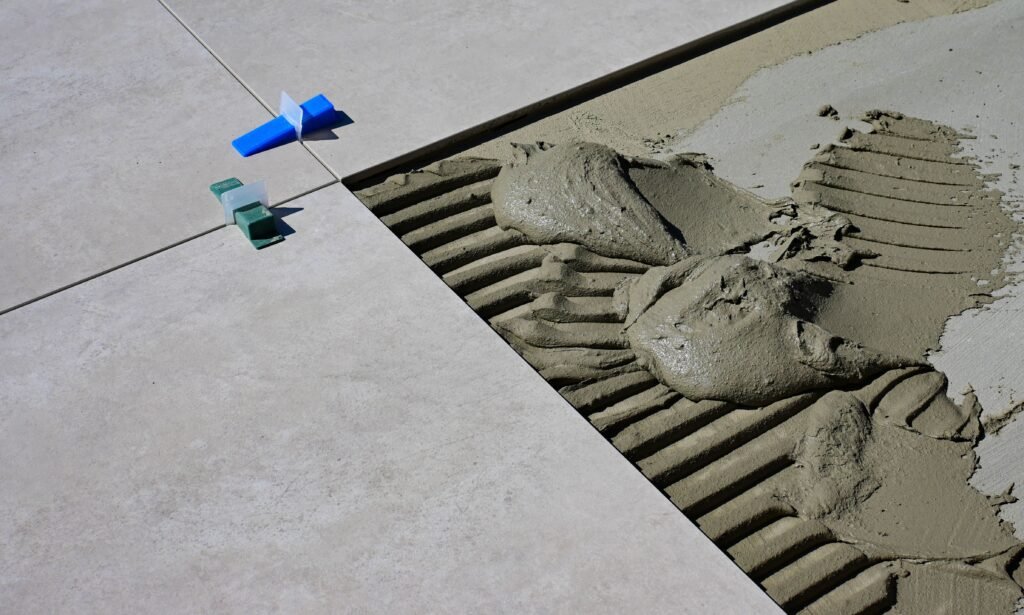
Tile requires a flat, solid subfloor to prevent cracking. Installing cement backer board costs $1-$2 per square foot and is required over wood subfloors. Leveling an uneven concrete floor with self-leveling compound costs $2-$5 per square foot. Removing old tile adds $2-$4 per square foot. Skipping subfloor prep is the most common cause of tile failure within 2-3 years.
4. Grout and Tile Size
Larger format tiles (24×24 inches or bigger) are trendy but harder to install on imperfect subfloors and cost $1-$3 more per square foot in labor. Smaller mosaic tiles require more grout lines and significantly more labor time. Epoxy grout costs twice as much as standard grout but resists staining far better — worth the upgrade in kitchens and bathrooms.
5. Room Complexity
Square and rectangular rooms are cheapest to tile. Bathrooms with toilets, vanities, and shower niches require many cuts around obstacles, adding 20-30% to labor time. Rooms with multiple doorways, curved walls, or built-in features increase installation complexity and cost.
Smart Ways to Reduce Tile Installation Costs
- Choose 12×12 or 18×18 ceramic tiles for the best balance of cost, durability, and easy installation
- Use premium tile only for visible areas like the main floor — use standard tile in closets and under appliances
- Get at least 3 quotes specifying the exact same tile and pattern for fair comparison
- Buy 15% extra tile for waste and future repairs — matching discontinued tiles is nearly impossible
- Schedule installation in fall or winter when tile contractors are less busy
Common Questions About Tile Floor Installation
How long does tile floor installation take?
Installing tile in a standard 120 square foot bathroom takes 2-3 days including subfloor prep, tile setting, and grouting. Larger rooms take longer — a 400 square foot kitchen floor takes 4-6 days. New tile cannot be walked on for 24 hours after setting and grout needs 72 hours to cure fully before heavy use.
How long do tile floors last?
Ceramic and porcelain tile floors last 75-100 years when properly installed and maintained — outlasting virtually every other flooring material. The weak point is grout, which may need resealing every 1-2 years and replacing every 10-15 years. Cracked tiles are usually caused by subfloor movement or improper installation rather than tile wear.
Can tile be installed over existing tile?
Yes, tile can be installed over existing tile if the existing floor is level, firmly bonded, and in good condition. This saves $2-$4 per square foot in removal costs. However, it raises the floor height by 3/8 to 1/2 inch which can create transitions with adjacent flooring and may require trimming doors.
The Real Cost of Tile Floors vs. Other Flooring
Tile has the highest upfront cost of any flooring option — but the lowest lifetime cost when you factor in durability. Carpet needs replacing every 10-15 years at $2-$8 per square foot. Hardwood lasts longer but costs more per square foot. Luxury vinyl plank is competitive with tile on price and nearly as durable. For wet areas like bathrooms and kitchens, tile remains the gold standard — no other material matches its combination of water resistance, durability, and design flexibility.