
Last updated: June 2026
Ceiling fan installation cost runs $150 to $500 for a straightforward replacement using existing wiring, and $400 to $1,000 when new wiring is required. The national average for a standard install sits around $250. The single biggest factor isn’t the fan you choose — it’s whether there’s already wiring and a fan-rated box where you want it.
This guide breaks down ceiling fan installation cost by scenario, explains when you need an electrician vs. a handyman, and shows you where the price can jump unexpectedly.
How Much Does Ceiling Fan Installation Cost?
Ceiling fan installation costs $150 to $500 for a basic replacement with existing wiring, or $400 to $1,000 for a new installation requiring wiring. Labor alone runs $100 to $300 for a replacement and $500+ when new circuits are involved. Complex jobs — high ceilings, new wiring runs, smart fans — can reach $2,000. The fan itself ranges from $50 to $1,000+.
| Installation Scenario | Total Cost (Fan + Labor) |
|---|---|
| Replace existing fan (existing wiring) | $150 – $500 |
| Install where light fixture exists | $200 – $600 |
| New install with new wiring | $400 – $1,000 |
| High / vaulted ceiling install | $300 – $800 |
| Smart fan or complex wiring | $600 – $2,000 |
| Labor only (replacement) | $100 – $300 |
What Determines Ceiling Fan Installation Cost?
1. Existing Wiring vs. New Wiring
This is the factor that matters most. Replacing an old fan or swapping a light fixture for a fan where wiring already exists is a quick 1–2 hour job. Running entirely new wiring through finished walls or ceilings is a substantially bigger project requiring a licensed electrician and possibly a permit. Running wire through an open attic is far cheaper than routing it through finished drywall, which requires cutting, patching, and repainting.
2. Electrician vs. Handyman
A handyperson charges $50–$80 per hour and can handle straightforward replacements using existing wiring. A licensed electrician charges $60–$130 per hour and is required for any work involving new circuits or wiring modifications under the National Electrical Code. Both often have minimum job fees of $100–$200 even for small jobs. For a simple swap, a handyman saves money; for anything involving new wiring, an electrician isn’t optional.
3. Ceiling Height
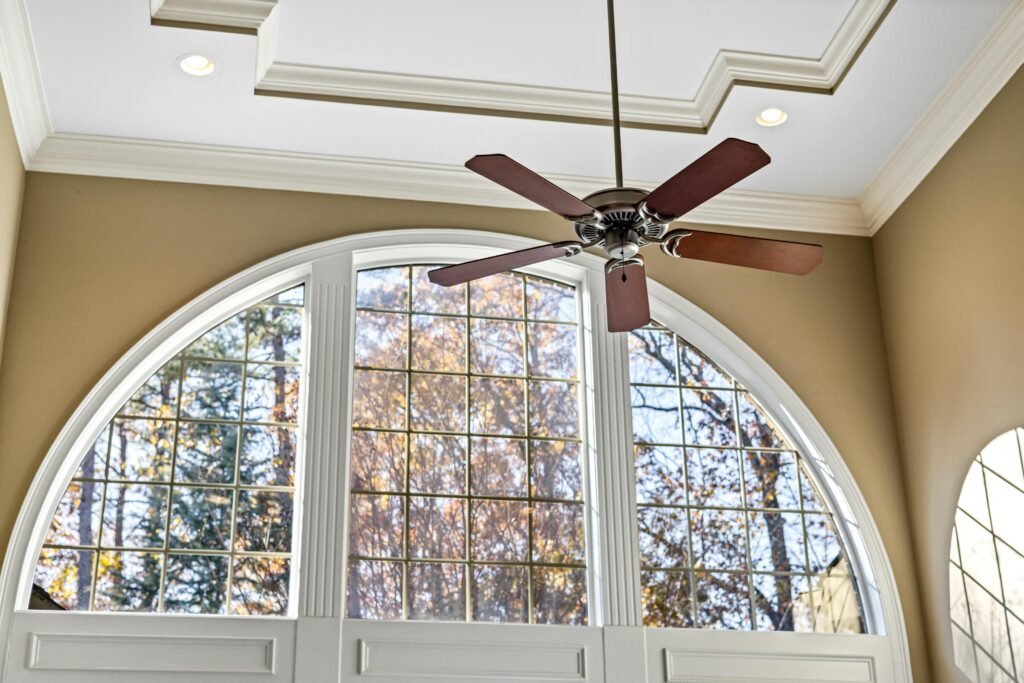
Standard 8–9 foot ceilings need no special equipment. Vaulted or cathedral ceilings above 12 feet require scaffolding or an extension ladder, adding $50–$150 to labor. High ceilings also need a longer downrod to bring the blades to the optimal 8–9 foot height from the floor for effective air circulation — an extra material cost.
4. Fan Type and Size
The fan itself is the other big variable. Basic standard fans start around $50; high-end smart fans with integrated lighting and app control exceed $1,000. Larger fans (60″+) for great rooms need more support and sometimes a second installer. Outdoor and wet-rated fans require special hardware. The fan-rated electrical box is critical — a standard light box isn’t built to hold a fan’s weight and motion, so a brace or fan-rated box must be installed if one isn’t already present.
The hidden cost most people miss: If your existing electrical box isn’t fan-rated, it must be replaced with one that is — a fan’s weight and vibration will eventually pull a standard light box loose, which is a real safety hazard. This adds $50–$150 but is non-negotiable. Also watch for “access points”: when wiring has to change direction inside the ceiling, electricians cut holes that need drywall patching and repainting. Ask upfront how many access points they anticipate.
Ceiling Fan Cost by Type
| Fan Type | Fan Price (Unit Only) | Best For |
|---|---|---|
| Standard (downrod) | $50 – $300 | Bedrooms, living rooms, 8 ft+ ceilings |
| Low-profile / hugger | $50 – $250 | Low ceilings under 8 ft |
| Smart fan (app/voice) | $150 – $600 | Smart home integration |
| Outdoor / wet-rated | $100 – $500 | Patios, porches, covered decks |
| Oversized (60″+) | $200 – $1,000+ | Great rooms, vaulted spaces |
Ceiling Fan Installation Cost Calculator
DIY Ceiling Fan Installation: Is It Worth It?
Replacing an existing ceiling fan is one of the more accessible DIY electrical projects for homeowners with basic skills — if there’s already a fan-rated box and existing wiring, you’re mostly disconnecting old wires and connecting new ones to matching colors. Doing it yourself saves the $100–$300 labor cost, and you only pay for the fan.
Where DIY stops being a good idea: any job requiring new wiring, a new circuit, or a box that isn’t fan-rated. These involve working inside your electrical system, and mistakes create fire and shock hazards. Most jurisdictions legally require a licensed electrician for new wiring under the National Electrical Code. High and vaulted ceilings also push DIY into risky territory — falls from ladders at that height are serious. For a simple swap on a standard ceiling, DIY is reasonable; for anything more, the labor cost is cheap insurance. If you’re tackling other electrical upgrades at the same time, our electrical panel replacement cost guide covers when a panel upgrade becomes necessary.
Are Ceiling Fans Worth It? Energy Savings
Ceiling fans are one of the most cost-effective comfort upgrades available. According to the U.S. Department of Energy, a ceiling fan can make a room feel up to 4°F cooler, letting you raise your thermostat and cut air conditioning costs by up to 30% during summer. Running a fan costs just $2–$5 per month at 8–12 hours of daily use — compared to central AC, which costs nearly 50 times more per hour to run.
ENERGY STAR-certified fans are about 60% more efficient than conventional fan-and-light combos. They cost $200–$300 but the reduced electricity use can offset the premium within one or two cooling seasons. One tip most people don’t know: run fans counterclockwise in summer for a cooling breeze, and reverse to clockwise in winter to push warm air down from the ceiling.
How Long Does Ceiling Fan Installation Take?
Replacing an existing fan with existing wiring takes about 1 hour. Installations requiring new wiring or switches take 2–3 hours. Complex jobs involving high ceilings, new circuits, or difficult wiring paths take longer. If you’re installing multiple fans in one visit, each additional fan goes faster since the installer is already set up.
Do You Need a Permit for a Ceiling Fan?
Replacing an existing ceiling fan typically doesn’t require a permit — the work uses existing wiring and doesn’t modify your electrical system. New installations that involve running new wiring or adding a circuit may require an electrical permit, depending on local regulations. Licensed electricians usually handle permit applications as part of their service, so confirm it’s included in your quote for any wiring work.
How to Hire a Ceiling Fan Installer
- Get 3 in-person estimates so you can compare on scope, not just price. A walk-through reveals whether you need a fan-rated box or new wiring — the things that move the price.
- Match the pro to the job. A handyman is fine for a straightforward swap; insist on a licensed electrician for any new wiring or circuit work.
- Confirm licensing and insurance. For electrical work, this protects you if something goes wrong. Ask for proof, not just verbal confirmation.
- Get the warranty in writing. A detailed contract covering labor warranty and the fan’s manufacturer warranty before work begins.
- Never pay in full upfront. A deposit is normal; full payment before completion is not.
Frequently Asked Questions About Ceiling Fan Installation Cost
How much does it cost to install a ceiling fan?
Ceiling fan installation costs $150 to $500 for a replacement using existing wiring, and $400 to $1,000 when new wiring is needed. The national average is around $250. Labor alone runs $100–$300 for a replacement, while complex jobs with new circuits or high ceilings can reach $2,000.
How much does it cost to replace an existing ceiling fan?
Replacing an existing ceiling fan costs $150 to $500 including the fan and labor. If the wiring and a fan-rated box are already in place, labor is just $100–$300 and takes about an hour. This is the cheapest ceiling fan scenario because no electrical modifications are needed.
Do I need an electrician to install a ceiling fan?
Not always. A handyman can replace an existing fan or swap a light fixture for a fan where wiring already exists. You need a licensed electrician for any job involving new wiring, a new circuit, or electrical modifications — this is required by code in most jurisdictions and ensures the work is safe and inspected.
How much does it cost to install a ceiling fan where there is no existing wiring?
Installing a ceiling fan with new wiring costs $400 to $1,000, and complex runs through finished walls can push it higher. Running wire through an open attic is much cheaper than routing through finished drywall, which requires cutting, patching, and repainting. This work requires a licensed electrician.
How long does it take to install a ceiling fan?
Replacing an existing fan with existing wiring takes about 1 hour. Installations requiring new wiring or switches take 2–3 hours. High ceilings, new circuits, or complex wiring paths take longer. Multiple fans installed in one visit go faster per unit.
Do I need a permit to install a ceiling fan?
Replacing an existing ceiling fan usually doesn’t require a permit. New installations involving new wiring or a new circuit may require an electrical permit depending on local rules. Your electrician typically handles the permit as part of the job — confirm it’s included in the quote.
How much does the ceiling fan itself cost?
Ceiling fans range from $50 for basic models to $1,000+ for high-end smart or oversized fans. Standard fans cost $50–$300, low-profile huggers $50–$250, smart fans $150–$600, and outdoor-rated fans $100–$500. The fan price is separate from installation labor.
Can I install a ceiling fan myself?
Replacing an existing fan with a fan-rated box and existing wiring is a reasonable DIY project for homeowners with basic skills, saving $100–$300 in labor. Any job requiring new wiring, a new circuit, or a non-rated box should be done by a licensed electrician for safety and code compliance.
How much does it cost to install a ceiling fan on a vaulted ceiling?
Vaulted or high-ceiling installations cost $300 to $800 because they require scaffolding or an extension ladder (adding $50–$150 to labor) plus a longer downrod to position the blades at the optimal height. The added height and equipment make this more expensive than a standard-ceiling install.
Is it cheaper to install multiple ceiling fans at once?
Yes. Installing multiple fans in a single visit saves on labor because the installer is already set up and mobilized. Two fans typically cost $200–$600 in labor and materials versus paying full price for two separate visits. If you’re outfitting several rooms, doing it together is the cheaper approach.