Last updated: June 2026
Here’s something most electricians won’t tell you upfront: the difference between a fair quote and an overpriced one for electrical panel work can be $1,500 to $3,000 on the exact same job. Electrical panel installation is one of the most opaque pricing categories in home improvement — homeowners rarely know what a fair price looks like, and some contractors exploit that. The average cost to install or upgrade an electrical panel in the United States runs $1,500 to $4,000 for most residential projects, but the real range stretches from $850 for a simple panel swap to $8,000+ for a full service upgrade with new wiring in an older home.
This guide breaks down every cost factor so you can evaluate quotes intelligently — and walk into every contractor conversation knowing exactly what fair looks like.
Electrical Panel Installation Cost by Type
| Project Type | Average Cost | What’s Included |
|---|---|---|
| Panel replacement (same amperage) | $850–$2,500 | Remove old panel, install new, reconnect circuits |
| 100A to 200A upgrade | $1,500–$3,500 | New panel, larger service entrance, utility coordination |
| 200A to 400A upgrade | $2,500–$5,000 | Heavy-up service, new meter base, utility work |
| Full rewire + new panel (older home) | $8,000–$20,000 | Complete electrical system overhaul |
| Add subpanel | $500–$1,500 | New subpanel, feeder wire, breakers |
Use Our Free Electrical Panel Cost Calculator
Get an instant estimate based on your current panel amperage, upgrade scope, and home age. This calculator uses national average pricing from licensed electricians across the United States.
Electrical Panel Installation Cost Calculator
What Actually Drives Electrical Panel Costs — The Real Breakdown
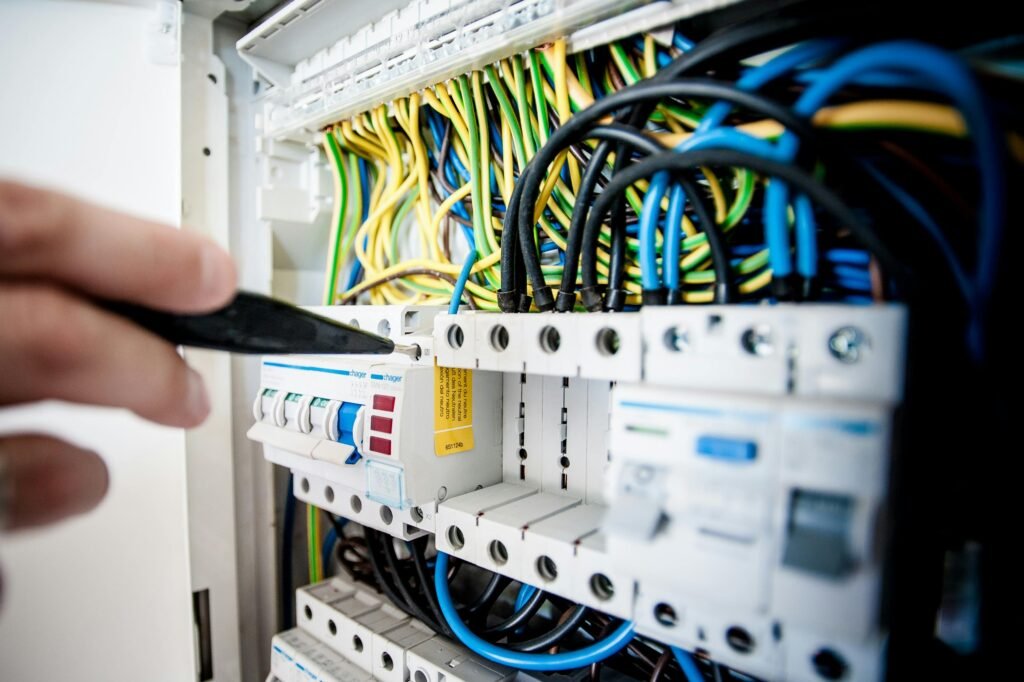
Most homeowners are surprised to find that the panel itself is often the cheapest part of the job. A quality 200A panel from Square D, Siemens, or Eaton costs $150–$300 at a supply house. The rest — labor, permits, utility coordination, and any necessary upgrades to the service entrance — is where the money goes.
1. Amperage Upgrade vs. Like-for-Like Replacement
A like-for-like panel replacement — same amperage, same location — is the simplest and cheapest scenario. The electrician disconnects the old panel, mounts the new one in the same spot, and reconnects all the existing circuits. Most experienced electricians complete this in 4–8 hours.
An amperage upgrade — typically from 100A to 200A — is a fundamentally different job. It requires coordinating with your utility company to temporarily disconnect service, possibly upgrading the service entrance conductors (the wires coming from the street), and sometimes installing a new meter base. This is why the price jumps significantly. The utility coordination alone can add $200–$500 and 1–3 weeks of scheduling delay in some areas.
2. Permits — Non-Negotiable and Worth Every Dollar
Electrical panel work requires a permit in virtually every US jurisdiction. Permits cost $50–$300 depending on location and scope. Any contractor who offers to skip the permit to save you money is offering to save themselves paperwork at your expense — an unpermitted panel replacement can void your homeowner’s insurance, create problems when selling your home, and in some states, result in fines requiring complete removal and reinstallation.
The permit process typically requires an inspection after installation. A good electrician will schedule this and be present during the inspection. If your contractor doesn’t mention permits, that’s a significant red flag.
3. Panel Brand — What Actually Matters
The panel brand debate generates more heat than it deserves. The brands to use: Square D QO series, Siemens PL series, Eaton BR series — all excellent, all widely supported. The brands to avoid: Federal Pacific Electric (FPE) Stab-Lok panels and Zinsco panels — both have documented safety issues and failure rates. If your home has either of these, replacement is worth prioritizing regardless of age.
Smart panels — Span, Lumin, Savant Power — are an emerging category that allows circuit-level monitoring and control from your smartphone. They cost $3,000–$5,000 installed but make sense if you’re also installing solar, a home battery, or an EV charger. For most homeowners doing a standard replacement or upgrade, a conventional panel from Square D or Siemens is the right choice at a fraction of the cost.
4. Home Age and Wiring Compatibility
Homes built before 1960 often have wiring that doesn’t meet modern code — aluminum branch circuit wiring, knob-and-tube wiring, or undersized conductors that can’t safely support higher amperage. Installing a new 200A panel in a home with 60-year-old wiring doesn’t automatically make the home safer — you’d be pushing more current through wiring not rated for it.
A good electrician will inspect your existing wiring before quoting and tell you honestly if any circuits need upgrading. This is where costs can escalate significantly in older homes — a full rewire runs $8,000–$20,000 for a typical house. If a contractor quotes you panel work in an older home without mentioning wiring, ask specifically whether the existing circuits can safely support the new service.
5. EV Charger and Solar Readiness
If you’re planning to add an EV charger or solar panels in the next 5 years, address it now during the panel upgrade — the incremental cost of sizing up or adding a dedicated circuit is far less than coming back later. A Level 2 EV charger requires a dedicated 240V/50A circuit — about $300–$600 in additional work when done alongside a panel upgrade, versus $800–$1,500 as a standalone project later. For solar, your installer will specify what panel capacity is needed — confirm this before your electrician starts work.
Signs Your Electrical Panel Needs Replacement or Upgrade
Not every panel problem requires full replacement. Here’s how to tell what you’re actually dealing with:
Replace or upgrade when: Circuit breakers trip frequently under normal loads. You’re adding significant new electrical loads (EV charger, hot tub, large addition, whole-home generator). Your panel is a Federal Pacific Stab-Lok or Zinsco. The panel is over 30–40 years old and showing signs of corrosion or heat damage. You’re doing a major renovation that requires new circuits.
Repair may be sufficient when: A single breaker is failing — replacement breakers cost $5–$50 and take 30 minutes to swap. The panel is in good condition but a specific circuit is overloaded — a licensed electrician can add a circuit for $150–$300. You’re experiencing flickering lights — this is often a loose connection, not a panel problem.
How to Get the Best Price on Electrical Panel Work
Electrical work is one of the more negotiable home improvement categories if you approach it correctly. Here’s what consistently works:
- Get 3 quotes minimum — prices for identical work from licensed electricians regularly vary by $500–$1,500. Always specify the same scope and panel brand when comparing.
- Ask for itemized quotes — equipment cost, labor, permit fees, and utility coordination fees listed separately. This tells you where the premium is and what’s negotiable.
- Check contractor licensing — every state requires electricians to be licensed. Verify your contractor’s license at your state licensing board before signing anything. Unlicensed electrical work is dangerous and uninsurable.
- Schedule in winter — electricians are typically less busy December through February. Off-season scheduling can reduce labor costs by 10–15%.
- Bundle with other electrical work — if you need new outlets, a ceiling fan, or an EV charger circuit, doing it during the panel replacement saves on mobilization costs.
Frequently Asked Questions About Electrical Panel Costs
How long does electrical panel installation take?
A like-for-like panel replacement takes 4–8 hours for an experienced electrician. A service upgrade from 100A to 200A takes 6–10 hours plus utility scheduling time. Utility companies in some areas require 1–3 weeks advance notice for service disconnection — your electrician should handle this coordination and factor it into the project timeline.
Do I need to upgrade from 100A to 200A service?
A 100A service was adequate for homes built before the 1970s with minimal appliances. Today’s homes with central AC, electric dryers, multiple refrigerators, and potential EV chargers easily exceed 100A capacity. If your breakers trip frequently, you can’t run multiple appliances simultaneously, or you’re planning significant additions to your home, a 200A upgrade is worth the investment. Most home buyers also expect 200A service — a 100A panel can be a negotiating point in real estate transactions.
Can I replace my own electrical panel?
Technically possible for a licensed DIY electrician, but not recommended for most homeowners. The service entrance conductors — the wires coming from the utility company’s transformer — remain energized even when your main breaker is off. Working near these requires either utility disconnection or working around live 240V conductors. The permit and inspection requirement also means a licensed electrician is typically needed for at least the inspection. The risk-to-savings ratio doesn’t favor DIY here — hire a licensed electrician.
How long does an electrical panel last?
A quality electrical panel lasts 25–40 years with normal use. The breakers inside may need individual replacement sooner — a breaker that trips repeatedly under normal load is likely failing and should be replaced. Signs your panel may be approaching end of life: burn marks or melted plastic near breakers, a burning smell when the panel is in use, visible corrosion on bus bars, or consistently warm panel door. Any of these warrants a licensed electrician inspection immediately.
What’s the difference between a panel upgrade and a service upgrade?
A panel upgrade replaces just the breaker box inside your home. A service upgrade increases the total amperage coming into your home — which requires replacing not just the panel but also the service entrance conductors (wires from the meter to the panel) and sometimes the meter base. Service upgrades require utility company coordination and typically cost $500–$1,500 more than a simple panel replacement.
Does a new electrical panel increase home value?
A new panel doesn’t typically add direct dollar-for-dollar value at resale, but an outdated or undersized panel can actively hurt your sale. Home inspectors flag old panels — especially Federal Pacific and Zinsco — as safety issues, which gives buyers ammunition to negotiate price reductions or demand replacement as a condition of sale. A modern 200A panel removes this obstacle and signals to buyers that the home’s electrical system is sound.
What permits are required for electrical panel work?
An electrical permit is required in virtually every US jurisdiction for panel replacement or upgrade. Your electrician applies for the permit, pays the fee (typically $50–$300), and schedules the inspection. The inspection happens after installation — the inspector verifies that the work meets local electrical code before approving it. Never allow a contractor to skip the permit process — the liability in case of a fire or insurance claim falls on you as the homeowner.
How do I know if my electrical panel is dangerous?
Immediate red flags: Federal Pacific Electric Stab-Lok panels (recognizable by the distinctive red Stab-Lok breakers) and Zinsco panels (often blue, gray, or turquoise) both have documented failure rates and should be replaced regardless of apparent condition. Beyond brand, warning signs include breakers that won’t stay reset, visible burn marks or melted components, a burning or electrical smell, and a panel that feels warm to the touch on the exterior.
Can I add circuits to my existing panel instead of replacing it?
If your panel has open breaker slots and sufficient amperage capacity, yes — adding circuits costs $150–$300 per circuit for a licensed electrician. If your panel is full, a tandem breaker (two circuits in one slot) costs $50–$150 installed and works in panels rated for them. If your panel is at capacity and you need substantial new electrical load, replacement or a subpanel addition is the right path.
Electrical Panel Cost vs. Other Major Home Systems
When prioritizing home improvement spending, electrical panel work occupies an interesting position — it’s rarely the most exciting project, but it’s often the most important safety-wise. A failing panel can cause house fires. An undersized panel limits everything else you want to do with your home.
Compared to other major system replacements, panel work is relatively affordable. A full HVAC system replacement costs $5,000–$12,000. A roof replacement runs $8,000–$15,000. A whole-house generator installation — which requires a properly sized panel — costs $5,000–$15,000. Against these benchmarks, a $1,500–$3,500 panel upgrade is a reasonable investment in the foundation of your home’s electrical system.
If you’re also considering solar panel installation, address the electrical panel first — your solar installer will need to confirm your panel can handle the additional capacity, and doing both projects together saves on labor.