Last updated: June 2026
Drywall installation cost runs $1.50 to $3.50 per square foot installed, with most homeowners spending $1,000 to $3,000 on a typical project. A standard 12×12 room costs $580 to $1,800 to drywall. The number that surprises people: labor is 65–75% of the total — the gypsum panels themselves are cheap, but hanging, taping, mudding, and sanding them well is skilled work.
This guide breaks down drywall installation cost by room and house size, explains the finish levels that quietly drive your price, and shows you when DIY actually saves money and when it costs more.
How Much Does Drywall Installation Cost?
Drywall installation costs $1.50 to $3.50 per square foot of wall and ceiling surface, including hanging, taping, mudding, sanding, and finishing. Materials alone are just $0.50 to $0.80 per square foot — the rest is labor. A single 4×8 sheet costs $30 to $70 installed. A 12×12 room runs $580 to $1,800, and a full 2,000 square foot house costs $8,000 to $30,000.
| Project | Approx. Drywall Area | Installed Cost |
|---|---|---|
| 12×12 room | ~400 sq ft | $580 – $1,800 |
| Primary bedroom / living room | ~600 sq ft | $850 – $3,100 |
| 2-car garage | ~800 sq ft | $1,000 – $3,900 |
| Basement (1,000 sq ft floor) | ~2,500 sq ft | $4,000 – $9,000 |
| Whole house (2,000 sq ft) | ~6,000 sq ft | $8,000 – $30,000 |
| Per 4×8 sheet (installed) | 32 sq ft | $30 – $70 |
How Drywall Is Priced: Wall Area, Not Floor Area
One thing trips up almost every homeowner estimating drywall: contractors price by wall and ceiling surface area, not your room’s floor area. Wall area typically runs 3 to 4 times the floor area once you account for all four walls plus the ceiling. A 12×12 room has 144 sq ft of floor but roughly 400 sq ft of drywall surface. This is why a “small” room still costs several hundred dollars — you’re covering far more square footage than the floor suggests.
What Determines Drywall Installation Cost?
1. Finish Level (The Hidden Price Driver)
This is the factor most homeowners don’t know about, and it’s huge. The Gypsum Association defines six finish levels (0–5). Level 4 is the standard for most painted residential walls — three coats of compound, sanded smooth. Level 5 adds a full skim coat over the entire surface, required under glossy paint or strong lighting where every flaw shows. Level 5 costs 30–60% more than Level 4 because of the extra labor. Lower levels (0–3) are for garages, fire-rated assemblies, or surfaces getting tile. Always confirm which finish level a quote includes — it’s the single biggest source of price differences between bids.
2. Hanging vs. Finishing
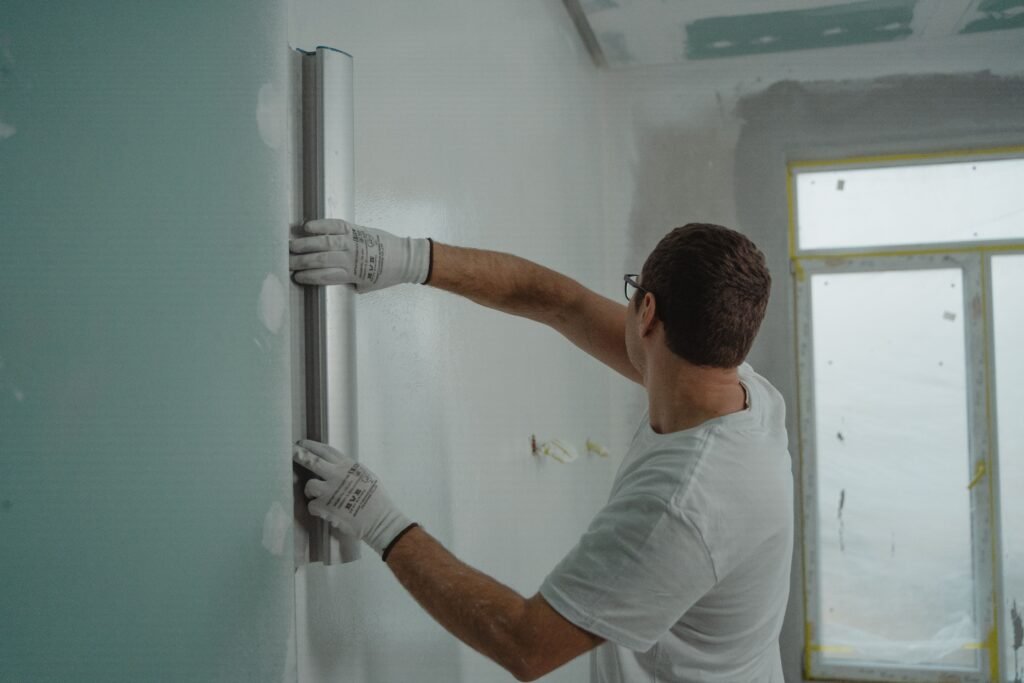
Drywall work is two jobs. Hanging (cutting and fastening sheets) costs $0.85–$1.90 per square foot and is relatively fast. Finishing (taping, mudding, sanding) costs $0.85–$2.70 per square foot and accounts for 60–70% of labor. Finishing is where craftsmanship shows — poor taping and sanding become glaringly visible once paint goes up, especially under natural light.
3. Ceiling Height and Room Complexity
Standard 8-foot ceilings are baseline. Ceilings over 9 feet add 15–25% to labor because of staging and the difficulty of working overhead. Vaulted ceilings, arches, soffits, curved walls, and bullnose corners increase labor by 15–40%. A simple rectangular room is cheap; an architecturally complex one is not.
4. Ceilings Cost More Than Walls
Drywalling a ceiling costs $1.50–$3.80 per square foot — more than walls — because hanging and finishing panels overhead is physically harder and slower. If your project includes ceilings, expect that portion to run higher per square foot than the walls.
5. Old Drywall Removal
If you’re replacing rather than installing new, removing old drywall adds $0.50–$2.50 per square foot. Homes built before the late 1980s may need lead or asbestos testing before demolition, adding $600–$1,500. This is a real and frequently overlooked cost in renovation projects.
The DIY trap finishers warn about: Hanging drywall is achievable for a determined DIYer. Finishing it well is genuinely hard. Pros repeatedly report being called in to fix DIY jobs where the homeowner spent $500 in materials and 40 hours of weekends, then paid $800 to have it redone properly. Visible seams, uneven sanding, and nail pops show up after painting — especially under natural light — and fixing them often costs more than hiring a pro from the start.
Drywall Installation Cost Calculator
Drywall Cost by Room Type
| Room | Time to Complete | Installed Cost |
|---|---|---|
| Bedroom (12×12) | 2–3 days | $600 – $1,400 |
| Bathroom (moisture-resistant board) | 1–2 days | $400 – $1,000 |
| Living room | 3–4 days | $850 – $3,100 |
| Garage (2-car) | 2–4 days | $1,000 – $3,900 |
| Basement | 1–2 weeks | $4,000 – $9,000 |
Bathrooms and other wet areas need moisture-resistant drywall (green board) or cement board behind tile — a slightly higher material cost that’s non-negotiable for durability. If you’re drywalling as part of a larger renovation, see our guides on basement finishing cost and bathroom remodel cost to budget the full scope.
Drywall Types and What They Cost
- Standard (½-inch) — The default for most walls and ceilings. Cheapest at $0.40–$0.60/sq ft material.
- Moisture-resistant (green board) — For bathrooms, laundry rooms, and humid areas. Slightly more than standard.
- Mold-resistant (purple board) — Stronger moisture and mold resistance than green board; best where prior mold issues existed.
- Fire-resistant (Type X) — Required by code in garages, between living spaces and garages, and some ceilings. Thicker (⅝-inch).
- Soundproof — Dense panels for media rooms and shared walls. The most expensive option.
DIY vs. Professional Drywall
DIY drywall can save 60–70% of total project cost since labor dominates the price. Materials for a 1,000 sq ft project run $800–$1,500, plus $200–$500 in tools if you don’t own them. For small repairs, a garage, or a single closet, DIY is reasonable.
For full rooms, ceilings, or any home you plan to sell, professional installation is usually more cost-effective in the long run. The reason is finishing: hanging sheets is the easy part, but achieving smooth, flaw-free seams takes practice most homeowners don’t have. Professionals also work far faster — a 12×12 room takes a crew 2–3 days including drying time; a DIYer often spends several weekends and still gets visible results. If finish quality matters, the labor cost buys a result that’s genuinely hard to replicate.
How to Get a Fair Drywall Quote
- Confirm the finish level in writing. A Level 4 quote and a Level 5 quote for the same room can differ by 40%+. If a contractor doesn’t specify, ask — vagueness here is the #1 source of quote confusion.
- Get the square footage basis. Make sure quotes are based on actual wall-and-ceiling area, calculated the same way, so you’re comparing equivalent scope.
- Ask what’s included. Hanging, taping, all three mud coats, sanding, and cleanup should be itemized. Some quotes exclude cleanup or final sanding.
- For older homes, ask about testing. Pre-1990 homes may need lead/asbestos testing before old drywall removal. Confirm whether it’s in the quote.
- Get at least 3 bids. Drywall pricing varies widely by region and contractor. According to the U.S. Bureau of Labor Statistics, drywall installer wages vary significantly by region, which directly affects your quotes.
How Long Does Drywall Installation Take?
A 12×12 room takes 2–3 days including drying time between mud coats. A 2,000 square foot house takes 3 days to 1 week depending on layout and crew size. The drying time between coats is the main reason drywall can’t be rushed — each coat of joint compound needs to fully cure before the next, and skipping this causes cracking later. Open floor plans go faster than homes with many small rooms.
Frequently Asked Questions About Drywall Installation Cost
How much does drywall installation cost per square foot?
Drywall installation costs $1.50 to $3.50 per square foot of wall and ceiling surface, including hanging, taping, mudding, sanding, and finishing. Materials alone are $0.50–$0.80 per square foot; the rest is labor, which makes up 65–75% of the total.
How much does it cost to drywall a 12×12 room?
Drywalling a 12×12 room costs $580 to $1,800, covering roughly 400 square feet of wall and ceiling surface. A standard Level 4 finish lands in the middle of that range; a premium Level 5 smooth finish pushes toward the top.
How much does it cost to drywall a 2,000 square foot house?
Drywalling a 2,000 square foot house costs $8,000 to $30,000, covering roughly 6,000 square feet of wall and ceiling surface (3× the floor area). Open floor plans cost less because they require fewer panels and less finishing labor than homes with many small rooms.
Why is drywall labor so expensive?
Labor is 65–75% of drywall cost because finishing — taping, mudding, and sanding — is skilled, time-consuming work. Achieving smooth, flaw-free seams that look good under paint and natural light takes experience. The panels are cheap; the craftsmanship to install them well is what you’re paying for.
What is the difference between Level 4 and Level 5 drywall finish?
Level 4 is three coats of compound sanded smooth — the standard for most painted residential walls. Level 5 adds a full skim coat over the entire surface, required under glossy paint or strong lighting where imperfections show. Level 5 costs 30–60% more due to the extra labor.
Is it cheaper to do drywall yourself?
DIY can save 60–70% since labor dominates the cost. Materials for a 1,000 sq ft project run $800–$1,500. But finishing is hard to do well — poor taping and sanding show after painting. DIY makes sense for small repairs and garages; for full rooms or homes you’ll sell, professional work is often more cost-effective.
How much does it cost to hang drywall without finishing?
Hanging drywall alone — cutting and fastening sheets without taping or finishing — costs $0.85 to $1.90 per square foot. This is a Level 0 finish, suitable only for temporary work or surfaces that will be covered. Most projects need finishing, which adds $0.85–$2.70 per square foot.
Does drywalling a ceiling cost more than walls?
Yes. Drywalling a ceiling costs $1.50 to $3.80 per square foot — more than walls — because hanging and finishing panels overhead is physically harder and slower. Ceilings over 8 feet add another 15–25% to the rate.
How much does it cost to remove old drywall?
Removing old drywall adds $0.50 to $2.50 per square foot. Homes built before the late 1980s may require lead or asbestos testing before demolition, adding $600–$1,500. Replacement (remove plus install) averages $2–$6 per square foot total.
How long does drywall take to install?
A 12×12 room takes 2–3 days including drying time between mud coats. A 2,000 square foot house takes 3 days to 1 week depending on layout and crew size. The drying time between compound coats is what prevents drywall from being rushed.