Last updated: June 2026
Landscaping cost in the United States ranges from $1,500 to $15,000 for a full front or backyard project, with most homeowners spending $3,000–$7,500 for a mid-range redesign. What separates a $2,000 project from a $20,000 one isn’t the size of the yard — it’s the scope, the hardscape, and whether you’re starting from scratch or refreshing what’s already there.
This guide breaks down costs by project type, explains where contractors make their margins, and gives you the numbers you need to evaluate quotes before signing anything.
How Much Does Landscaping Cost?
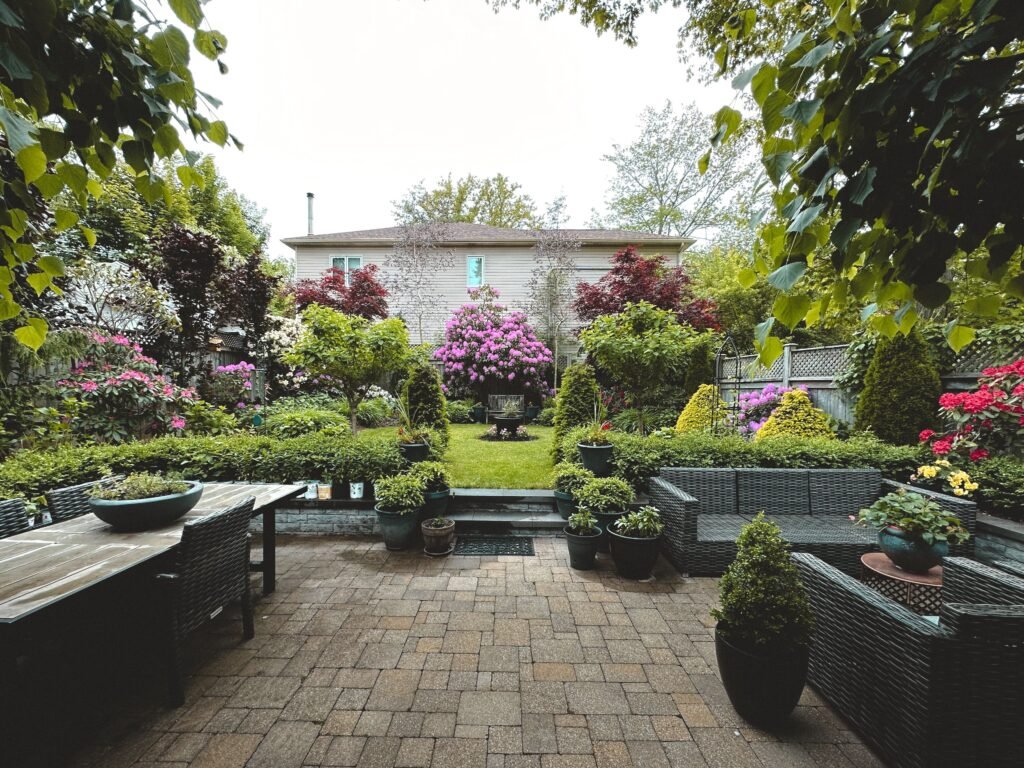
Landscaping costs $1,500 to $15,000 for most residential projects. A basic cleanup and replanting runs $1,500–$3,500. A mid-range redesign with new planting beds, sod, and a walkway costs $3,500–$8,000. Full backyard transformations with hardscape — patios, retaining walls, outdoor lighting — typically run $8,000–$25,000 or more depending on scope.
| Project Type | Typical Cost |
|---|---|
| Basic cleanup + replanting | $1,500 – $3,500 |
| Mid-range redesign (sod, beds, walkway) | $3,500 – $8,000 |
| Full backyard transformation | $8,000 – $25,000 |
| Front yard curb appeal project | $2,000 – $6,000 |
| Lawn installation (sod, per sq ft) | $0.90 – $2.00 |
| Garden bed installation (per bed) | $500 – $3,000 |
| Retaining wall (per linear foot) | $20 – $100 |
| Outdoor lighting installation | $2,000 – $6,000 |
What Drives Landscaping Cost?
Most homeowners are surprised by how quickly landscaping quotes escalate. There are four factors that matter far more than yard size alone.
1. Hardscape vs. Softscape Ratio
This is the single biggest cost driver in any landscaping project. Softscape — plants, grass, mulch, soil — is relatively affordable. Hardscape — patios, walkways, retaining walls, edging, outdoor kitchens — costs three to five times more per square foot and requires specialized labor. A backyard project that’s 80% plants costs a fraction of one that’s 40% concrete and stone. If your plans include a patio, see our concrete patio cost guide for a full breakdown of what that line item adds.
2. Yard Condition and Grading
A flat, clear yard costs significantly less to landscape than one with slopes, poor drainage, heavy clay soil, or tree stumps to remove. Grading — reshaping the ground to manage drainage — costs $500 to $3,000 for a typical residential yard and is often necessary before any planting or hardscape work. Contractors sometimes bury this cost in a general labor line item, so ask specifically whether grading is included in your quote.
3. Plant Selection and Maturity
A 3-gallon shrub costs $25–$50 at a nursery. A 15-gallon specimen that looks established the day it’s planted costs $150–$400. Mature trees planted professionally run $300 to $3,000 each depending on species and size. Most landscapers use a markup of 30–50% over wholesale on plant material — that’s standard, but knowing it helps you evaluate whether switching from specimen plants to younger material could meaningfully cut your budget.
4. Irrigation Systems
Installing an in-ground irrigation system during a landscaping project costs $2,500 to $4,500 for a typical residential yard. It’s one of the most overlooked line items — homeowners often add it as an afterthought, then discover it’s cheaper to install during the initial project than to retrofit later when beds and sod are already in place. If you’re doing a full redesign, get an irrigation quote upfront even if you’re not sure you want it.
Landscaping Cost by Project Type
| Project | Average Cost | Notes |
|---|---|---|
| Sod installation | $1,200 – $4,500 | For 1,000–2,500 sq ft; includes prep and labor |
| Seeding (lawn from seed) | $300 – $1,500 | Cheaper, but takes 6–12 weeks to establish |
| Mulching (per yard) | $75 – $150 | Typical yard needs 5–15 yards |
| Planting beds (per bed) | $500 – $3,000 | Varies widely by size and plant selection |
| Retaining wall | $3,500 – $10,000 | For a typical 20–30 linear foot wall |
| Irrigation system | $2,500 – $4,500 | In-ground system for standard residential yard |
| Outdoor lighting | $2,000 – $6,000 | Low-voltage landscape lighting, installed |
| Tree planting (per tree) | $150 – $3,000 | Depends on species and maturity |
| Grading / drainage | $500 – $3,000 | Often required before other work begins |
Landscaping Labor Cost
Landscaping labor rates vary significantly by region and by the type of work involved. General landscape laborers charge $25–$50 per hour. Experienced landscapers and crew leads charge $50–$75 per hour. Landscape designers — who create plans, specify plants, and oversee installation — charge $50–$150 per hour for design work, sometimes separate from the installation quote.
Most residential landscaping projects are quoted as a flat project price rather than time-and-materials. That’s generally better for homeowners — it gives you a fixed number and puts the scheduling risk on the contractor. Be cautious of time-and-materials quotes on larger projects where scope could expand.
Design fees: Many landscaping companies offer free design consultations, but a detailed landscape plan from a certified landscape architect costs $1,000 to $5,000. For projects over $15,000, a professional design is usually worth it — it prevents expensive mistakes and gives you a document you can use to get competitive bids from multiple contractors.
Front Yard vs. Backyard Landscaping Cost
Front yard projects are typically smaller in scope and focused on curb appeal — clean lines, defined beds, a healthy lawn, and a welcoming entrance. Expect to spend $2,000–$6,000 for a meaningful front yard upgrade on a standard suburban lot.
Backyard projects almost always cost more because they’re larger and homeowners expect more from them — outdoor living areas, privacy plantings, fire pits, or water features. A backyard that’s purely lawn and plantings might run $4,000–$10,000. Add a patio and you’re looking at $8,000–$18,000. Add a deck, and costs climb further — see our deck building cost guide for what that adds. Add a pool, and you’re in a different budget category entirely — our pool installation cost guide covers that.
DIY vs. Professional Landscaping
There’s a wider spectrum here than in most home improvement categories. Mulching, planting annuals, laying sod in a small area, and basic edging are all genuinely DIY-friendly — you’ll save 40–60% on labor by doing them yourself. A weekend and $500 in materials can meaningfully improve curb appeal.
Where DIY gets expensive fast: grading, retaining walls over 2 feet tall, irrigation systems, and hardscape. Poorly graded yards develop drainage problems that damage foundations. Retaining walls over 2 feet typically require permits and proper engineering to handle soil pressure. Irrigation systems installed incorrectly lead to soggy patches and plant losses. These are the areas where professional installation pays for itself.
A practical middle ground that many homeowners use: hire a landscape designer for a detailed plan ($500–$1,500 for a smaller project), then DIY the softscape installation using that plan as a guide. You get professional expertise on plant selection and layout without paying professional labor rates for planting.
Landscaping Cost Calculator
How to Get a Fair Landscaping Quote
Landscaping is one of the more difficult categories to price-check because every yard is different and scope can expand quickly. A few things that consistently help:
- Get a written scope of work, not just a total number. A good quote itemizes labor, materials, plant list with sizes, and any subcontracted work (irrigation, lighting). A quote that just says “landscaping — $8,500” is impossible to evaluate or compare.
- Get at least 3 bids. Landscaping prices vary enormously — 50% swings between contractors for identical scope are common. This is partly legitimate (different overhead, crew size, plant sources) and partly margin difference. Multiple bids reveal where the market actually is.
- Ask about plant warranties. Reputable landscapers typically warranty plants for one growing season — if something dies within that period, they replace it. Get this in writing. Companies that don’t offer any plant warranty are essentially selling you materials with no accountability for the installation quality.
- Understand what “installed” means for plants. Does the quote include soil amendment, mulch, and staking for trees? Or just the plant in the ground? The difference in long-term survival rates — and cost — is significant.
- Clarify the payment schedule. A typical breakdown for larger projects is 30% upfront, 40% at project midpoint, 30% on completion. Be cautious of contractors who want more than 50% before any work begins.
Landscaping ROI: What Actually Adds Value
Not all landscaping is equal from a resale perspective. According to the National Association of Realtors Remodeling Impact Report, a standard lawn care program recovers 100% of its cost at resale. Overall landscape upgrades recover 80–100% on average — among the highest of any home improvement category.
The projects with the best ROI are the ones buyers immediately notice: a healthy, green lawn, clean defined planting beds, mature foundation plantings, and a tidy front entrance. Elaborate water features, custom sculpture gardens, and highly specific plant collections rarely recover their cost because they appeal to a narrower buyer pool.
If you’re landscaping primarily for resale, focus on the front yard — it’s what buyers see first and what photographs well in listings. A clean, green front yard with defined beds recovers far more per dollar than the equivalent spent on a backyard feature that buyers may tear out anyway.
If you’re planning outdoor living spaces alongside your landscaping — a fence for privacy, a patio for entertaining — see our guides on fence installation cost and concrete patio cost to budget those projects together.
Ongoing Landscaping Maintenance Costs
A landscaping installation is a one-time cost; maintaining it is recurring. Basic lawn care — mowing, edging, blowing — costs $30–$80 per visit depending on yard size and region, or $1,200–$3,000 per year for weekly service. Full-service landscape maintenance including fertilization, pruning, mulch refresh, and seasonal cleanups runs $2,000–$6,000 per year for a typical residential property.
One thing worth planning for upfront: the plants you choose now determine your maintenance costs for years. Low-maintenance native plantings, established groundcovers instead of lawn in difficult areas, and mulched beds require significantly less ongoing labor than high-maintenance annuals, formal hedges, or large lawn areas in drought-prone regions.
Frequently Asked Questions About Landscaping Cost
How much does basic landscaping cost?
Basic landscaping — cleanup, new mulch, planting beds, and a lawn refresh — costs $1,500 to $3,500 for a standard residential yard. More involved projects with sod installation, new walkways, or significant replanting run $3,500 to $8,000.
How much does it cost to landscape a backyard?
Backyard landscaping costs $5,000 to $25,000 for most homeowners depending on size and scope. A basic backyard with lawn and plantings runs $5,000–$10,000. Adding a patio, retaining walls, or outdoor lighting pushes the total to $10,000–$25,000 or more.
Is landscaping worth the investment?
Yes — especially front yard landscaping. According to the National Association of Realtors, standard landscaping upgrades recover 80–100% of their cost at resale. A healthy lawn and clean planting beds are among the highest-ROI improvements you can make before listing a home.
How much does sod installation cost?
Sod installation costs $1,200 to $4,500 for a typical 1,000–2,500 square foot lawn, including soil prep and labor. Seeding is cheaper at $300–$1,500 but takes 6–12 weeks to establish. For areas with heavy foot traffic or where you need instant results, sod is worth the premium.
What is the cheapest way to landscape a yard?
The cheapest effective approach: focus on lawn health first (fertilize, overseed bare patches, clean up edges), add mulch to existing beds, and plant perennials rather than annuals for long-term color without yearly replanting costs. DIY the softscape work and reserve professional help for anything involving grading, hardscape, or irrigation.
How much does a retaining wall cost?
Retaining walls cost $20 to $100 per linear foot depending on material and height. A typical 20-foot wall runs $3,500 to $10,000 installed. Concrete block and timber are the most affordable options; natural stone and engineered block systems cost more. Walls over 2 feet typically require permits and engineering review.
How long does landscaping take?
A basic cleanup and replanting takes 1–3 days. A mid-range yard redesign typically takes 3–7 days for a crew of 2–3. Full backyard transformations with hardscape, irrigation, and lighting can take 2–4 weeks depending on scope and permit timelines.
Should I hire a landscape designer or a landscaping contractor?
For projects over $10,000, a landscape designer or architect is worth the fee ($1,000–$5,000 for a residential plan). They prevent expensive mistakes, help you avoid plants that won’t thrive in your conditions, and give you a plan you can use to get competitive bids. For smaller projects, most landscaping contractors provide basic design as part of the bid process.
How much does irrigation installation cost?
In-ground irrigation systems cost $2,500 to $4,500 for a typical residential yard. It’s significantly cheaper to install during a landscaping project than to retrofit afterward when beds are established. If you’re doing a full redesign, get an irrigation quote upfront even if you’re undecided.
What time of year is best to landscape?
Fall is the best time to plant most trees, shrubs, and perennials in most US climates — cooler temperatures reduce transplant stress and roots establish over winter. Spring is second best. Summer planting is possible but requires more irrigation. Sod can be installed most of the year except during extreme heat or ground frost. Contractors are often less busy and more negotiable in late fall and winter.